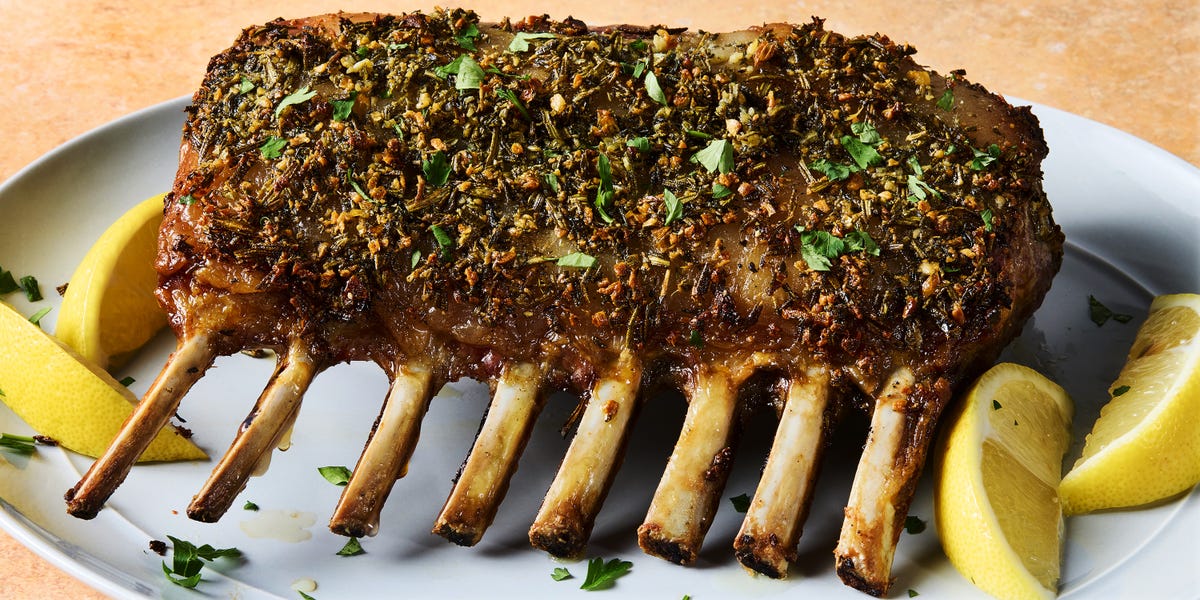
Perfect Rack of Lamb: Your Ultimate Guide to Temperature, Resting & a Flavorful Crust
Few dishes command as much attention on a dinner table as a perfectly cooked **rack of lamb**. With its elegant presentation and succulent, tender meat, it often feels like a restaurant-quality meal reserved for experienced chefs. Yet, here's the delightful secret: preparing a show-stopping **rack of lamb** is surprisingly straightforward, making it an ideal choice for everything from a festive Easter lunch to a romantic date night or a hearty family gathering. The key lies in understanding a few fundamental principles: optimal cooking temperature, the critical importance of resting, and how to achieve that irresistible, flavorful crust. This comprehensive guide will demystify the process, ensuring your next **rack of lamb** is nothing short of perfection.
Unlocking the Mystery: What is Rack of Lamb?
Before we dive into the cooking process, let's clarify what a **rack of lamb** truly is. Simply put, a **rack of lamb** is a section of lamb ribs that contains individual lamb chops still connected. While these can be separated into individual chops for grilling or pan-frying, roasting them as a whole rack offers a more dramatic presentation and often yields a more tender, evenly cooked result.
You might hear the term "French trimmed" when discussing a **rack of lamb**. This refers to the aesthetic preparation where the meat and fat are removed from the ends of the rib bones, leaving them exposed and clean. This not only enhances the visual appeal, making those bones natural "handles," but also prevents them from charring excessively during roasting. A **rack of lamb** is generally a lean, tender cut, with most of its natural fat concentrated along the line of the bones.
When planning your meal, a single **rack of lamb**, typically weighing around 1.5 pounds, usually serves three to four people, depending on appetites. For larger gatherings, such as an Easter feast, two such racks will comfortably feed six to eight guests.
The Path to Perfection: Roasting Rack of Lamb
The beauty of cooking **rack of lamb** lies in its simplicity and efficiency. While there are various methods, one of the most consistently successful and easiest ways is oven roasting at a high temperature.
High Heat Roasting: The Secret to a Flavorful Crust
For many home cooks, the oven is your best friend when preparing **rack of lamb**. Roasting at a high temperature—specifically
450°F (232°C)—is key to achieving that coveted golden-brown, flavorful crust. This intense initial heat quickly sears the exterior, locking in moisture and allowing any garlicky, herbaceous rub to caramelize into a delectable coating.
The advantage of this high-heat method isn't just about the crust; it's also incredibly time-efficient. A 1.5-pound **rack of lamb** can reach a beautiful medium doneness in approximately 30 minutes, freeing you up to focus on other elements of your meal, like those delightful side dishes. This hands-off approach makes it a fantastic option for entertaining, allowing you to impress your guests with minimal effort in the kitchen. For more tips on effortless entertaining, check out our guide on
Easy Oven-Roasted Rack of Lamb: Impress Guests with Minimal Effort.
To Sear or Not to Sear: Weighing Your Options
One common question that arises when cooking larger cuts of meat is whether to sear it before roasting. For **rack of lamb**, the good news is that you absolutely don't have to sear it! Skipping the stovetop sear offers significant benefits: it prevents dirtying a second pan, minimizes oil splatter, and streamlines the cooking process into one easy oven step. The high oven temperature effectively creates a delicious crust without the need for prior searing.
However, it's worth acknowledging that some culinary experts, like Chef Gordon Ramsay, advocate for a gentle pre-sear. Their reasoning often centers on achieving an even, controlled browning and leveraging the heat retention of a cast-iron pan. If you choose to sear, the emphasis is on *gentle* searing over high heat, rather than an aggressive hard sear, to ensure the meat doesn't tear when sliced. This can be a more involved process, and for many, the "no-sear" oven method yields equally impressive results with less fuss. For a deeper dive into this debate, explore
Rack of Lamb: Searing Secrets vs. Easy No-Sear Oven Roasting. Ultimately, for a simple yet elegant preparation, the direct oven roast is a fantastic choice.
Mastering Internal Temperature and Resting for Juiciness
Achieving the perfect doneness and retaining the maximum juiciness are perhaps the two most crucial steps in cooking an exceptional **rack of lamb**. These elements are entirely within your control with the right techniques.
Hitting the Sweet Spot: Ideal Internal Temperature
The official recommendation from the USDA for lamb is an internal temperature of
145°F (63°C), followed by a minimum three-minute rest. This will result in lamb cooked to medium doneness, which is often considered ideal for a tender, flavorful **rack of lamb**.
However, personal preference plays a significant role. Here’s a quick guide to different doneness levels for **rack of lamb**:
*
Rare: 120-125°F (49-52°C) – Very red, cool center.
*
Medium-Rare: 125-130°F (52-54°C) – Red, warm center.
*
Medium: 130-135°F (54-57°C) – Pink, warm center. This is the goal for many, providing a balance of tenderness and robust flavor.
*
Medium-Well: 135-140°F (57-60°C) – Slightly pink center.
*
Well-Done: 145°F (63°C) and above – No pink, fully cooked.
To accurately gauge doneness, a reliable meat thermometer is indispensable. Insert it into the thickest part of the meat, avoiding the bone, for the most precise reading. Remember that the temperature will continue to rise slightly (carry-over cooking) during the resting period.
The Critical Art of Resting: Before and After Roasting
Resting is often overlooked but is absolutely paramount for a perfectly tender and juicy **rack of lamb**. There are two key resting periods:
1.
Pre-Roasting Rest (Room Temperature):
* Let your **rack of lamb** sit at room temperature for at least
1 hour before placing it in the oven.
*
Why it's crucial: Bringing the meat closer to room temperature before cooking ensures more even heat penetration. This prevents the outer layers from overcooking while the center struggles to catch up, leading to a consistently tender result throughout the entire rack.
2.
Post-Roasting Rest (After Oven):
* Once removed from the oven, resist the urge to slice immediately! Tent the **rack of lamb** loosely with foil and let it rest for a minimum of
10 minutes. While the USDA suggests 3 minutes, a slightly longer rest period, like 10 minutes or even up to 15, allows for superior results.
*
Why it's crucial: During cooking, muscle fibers contract, pushing juices to the center of the meat. Resting allows these juices to redistribute throughout the entire rack. If you slice too soon, those precious juices will simply run out onto your cutting board, leaving you with dry meat. The resting period also allows for a bit of carry-over cooking, ensuring your lamb reaches its ideal final temperature. If you used a cast-iron pan for cooking, leaving the lamb in the hot pan during the rest can further aid this process, retaining even heat and contributing to the final doneness.
Crafting the Perfect Crust: Rubs and Flavors
The cornerstone of a truly delicious **rack of lamb** is often the flavorful crust it develops. This crust is typically achieved through a simple yet potent rub applied generously before roasting.
A classic and highly effective rub involves a combination of:
* Fresh minced garlic
* Hearty fresh herbs like rosemary and thyme (oregano can also be a wonderful addition)
* Coarse salt and freshly cracked black pepper
* A drizzle of olive oil to bind it all together
Don't be shy with your application! Gently press the rub all over the meaty surfaces of the **rack of lamb**, ensuring every inch is coated. This not only infuses the meat with incredible aroma and taste but also contributes significantly to that irresistible, crispy exterior once roasted at high heat. Allow the rub to meld with the lamb during its pre-roasting room temperature rest for maximum flavor penetration.
Serving Your Stunning Rack of Lamb
Once your **rack of lamb** has rested beautifully, it's time for the final, satisfying step: carving. Slice the rack between the bones into individual chops, and arrange them artfully on a warm platter.
**Rack of lamb** is incredibly versatile and pairs well with a variety of side dishes, especially those that complement its rich flavor profile. For a spring feast, consider:
*
Potato dishes: Rich potatoes au gratin, creamy mashed potatoes, or bright, tangy Greek lemon potatoes are all excellent choices.
*
Spring vegetables: Sautéed asparagus with a hint of lemon, glazed carrots, or fresh green beans almondine add color, texture, and essential nutrients to your plate.
*
A light sauce: A simple pan sauce made from the drippings, or a vibrant mint sauce or chimichurri, can elevate the experience further.
Whether it's the star of your Easter lunch, a sophisticated spring dinner party, or a special meal for two, a perfectly cooked **rack of lamb** promises to be a memorable and impressive centerpiece.
Conclusion
Preparing a perfect **rack of lamb** is far from daunting. By focusing on a few key elements—the high-heat oven roasting technique for a magnificent crust, precise temperature monitoring for ideal doneness, and the non-negotiable resting periods—you can consistently achieve a succulent, tender, and incredibly flavorful dish. This elegant cut of meat, surprisingly simple to master, is a testament to the fact that some of the most impressive meals require minimal effort for maximum impact. So, go ahead, gather your ingredients, follow these tips, and prepare to impress with your culinary prowess. Your perfect **rack of lamb** awaits!